top of page
Galleries
Portraits
 Udaipur, Rajasthan, IndiaCity life also takes place on the rooftops. There are the restaurants and bars that advertise the best views of the lake, there are women hanging their clothes, children playing, people watching children playing cricket in the street, etc. |  Udaipur, Rajasthan, IndiaThe famous Lake Palace, located in the middle of Lake Pichola is one of the most beautiful sights of Udaipur. |  Udaipur, Rajasthan, IndiaThe City Palace towers over Lake Pichola. The balconies, cupolas, and towers of the palace give a wonderful view of the lake and the surrounding city. |  Jaisalmer, Rajasthan, indiaCity that contrasts with the rest of cities in India. The architecture and the sand color that bathes it is more reminiscent of the Middle East than Hindustan. |
|---|---|---|---|
 Jaisalmer, Rajasthan, IndiaThis golden sand color has earned it the nickname “Golden City”. |  Jaipur, Rajasthan, IndiaThe mamita, resting, after touring the Amber Fort |  Jaipur, Rajasthan, IndiaThe elegant woman in one of the most beautiful frames of the fort |  Jaipur, Rajasthan, IndiaThe sweepers are in charge of keeping the fort clean. |
 Jaipur, Rajasthan, IndiaSuffering begins from childhood. The education for the male child is special, as well as the food and all the stimulations. On the other hand, the female daughter occupies a secondary role and her obligation is to be present in the housework instead of playing. Men are those who can study, men are those who can have and tend a business, men are what enter the police force, men are teachers, men… etc. |  Jaipur, Rajasthan, IndiaTourist posing in the city palace |  Jaipur, Rajasthan, IndiaTourist posing in the city palace, one of the most beautiful, I think. |  Agra, Uttar Pradesh, IndiaMotorcycles and auto rickshaw the most popular transport |
 Varanasi, Uttar Pradesh, IndiaThe red dot of Hindu women is the heritage of this belief, Hindu. This mole receives different names: tilaka, bindi (point in Sanskrit language), or kumkum, and it is made up of materials such as sandalwood or charcoal. In the case of women, the tilaka has a very different meaning from that of men: if the dot is red, it indicates that they are married. Also, this red point occupies the position of the so-called Ajna Chakra, one of the 7 Indian chakras (those considered most important although th |  Varanasi, Uttar Pradesh, IndiaVaranasi is the India of your imagination. This is one of the world's oldest continually inhabited cities, and one of the holiest in Hinduism. |  Makkiyad, Kerala, IndiaThe baby of the family who welcomed us into their home for a few days and have made us live an unforgettable experience. |  Kochi, Kerala, IndiaThe communist side of India |
 Varanasi, Uttar Pradesh, IndiaThe man who prepares the chai asked me for a photo. very nice him. |  Hampi, Karnakata, IndiaBeutiful Family, just want a Picture. |  Hampi, Karnakata, indiaMy pretty friend posing in one of the temples. |  Varanasi, Uttar Pradesh, IndiaThe typical costume that Indian women wear is called Sari. It is a fabric that wraps the body at the waist, like a blouse or petticoat, also covering the legs and head. "Sari" means cloth band, and it is a word from the western part of India |
 Paris, FranceThe Pont des Arts also called Passerelle des Arts, is one of the most emblematic "pedestrian bridges" that crosses the Seine River in Paris. It was famous all over the world for the "Locks of Love", but the quantity of these became so great that due to their weight they put the bridge at risk of collapse again ..... for this reason, in 2015 the 37 bars to protect the railings where the padlocks were placed and were replaced by glass panels ..... there are still some padlocks on the bases of the |  La Plata, Buenos Aires, ArgentinaShe is a treasure, she is the little person that I adore in this world! |  Panama, Buenos Aires, ArgentinaThe happiest child in the world playing with sand |  San Francisco, California, USA.Get lost in the streets of San Francisco with her, Francia. |
 Santo Domingo de los Tsachilas, EcuadorThe Tsáchilas are part of the 14 indigenous nationalities of Ecuador. They are located in the province of Santo Domingo de los Tsáchilas, with its capital the city of Santo Domingo (4 hours from Quito to the south). They speak the Tsáfiki language, from the Barbacoan linguistic family, which means the true word. |  Santo Domingo de los Tsachilas, EcuadorThe "colorados" Indians are the last vestige of a tribe that long ago occupied very large areas, they are peaceful, but not very sociable; their tribal name, colorados, derives from the custom of putting a mixture of achiote on their hair, which in this way acquires a remarkable consistency, and of painting their bodies red, using the dye extracted from the seed of a plant called onoto. The objective of this practice is not purely aesthetic, since the juice of the onoto has the property of keepi |  Cuyabeno, Sucumbios, EcuadorEcuador has ancestral peoples that have preserved the customs and traditions of antiquity. Immersing yourself in your way of life is an invitation to change the usual for the unexpected and magical. |  Cuyabeno, Sucumbios, EcuadorIts origin is Pre-hispanic, and it is about consistent cassava tortillas.The siekopaai and sionas native women are in charge of its preparation, which is meticulous; First the cassava is shredded; the zest is squeezed with the sënoriya, an instrument shaped like a scarf, made with tree fiber from a place called sënorijati The tortillas are cooked one by one in a pot of clay, which needs to be very hot, then the dough is immediately placed, and spread evenly with your hand in the form of a c |
 Cuyabeno, Sucumbios, EcuadorCuyabeno Beaches, a territory inhabited by the Kichwa nationality, is a new development model, where the first community of the millennium can be seen, in perfect harmony with the environment. |  Quito, Pichincha, EcuadorIn the streets there are also festivals and parades |  Quito, Pichincha, EcuadorQuito, the second tallest capital in the world, located on the slopes of the Pichincha volcano, has the largest and best preserved historic center in Latin America, a true heritage treasure that houses churches, museums and cultural centers that will allow you to discover, through a wonderful trip, the history of Ecuador and its richness in terms of cultural and natural diversity. |  Cayambe, Pichincha, Ecuador.Beautiful handmade blouses, tablecloths, curtains and tablecloths inspired by wildlife and flowers, designed to the highest quality. Some pieces require months of work, represent the art of the region and are special souvenirs that you can purchase and take home a nice souvenir. |
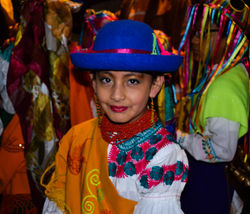 Quito, Pichincha, EcuadorThe Jacchigua Foundation is creating spaces to grow together, seeking identity, dignity and self-esteem for which the inclusion of human beings is carried out with dance, rhythm, colors and textures, with movements according to the capacities of each one of the groups |  Pujilí, Cotopaxi, EcuadorThe Quilotoa Loop is a remote, bumpy, mountainous road which is linking several high andean villages and towns with the city of Latacunga. |  Pujilí, Cotopaxi, EcuadorIt offers a chance to get off the Pan American highway and see some of the more remote people and cultures of the central Andes of Ecuador. It is named after the town of Quilotoa, which is also home to the beautiful Laguna Quilotoa. |  Olmedo, Esmeraldas, EcuadorHe just wanted to pose for the photo. A boy we met on the way to the bus terminal. |
 Olmedo, Esmeralda, EcuadorOne of the attractions of this coastal town, which is protected from the sea by a mangrove cordon of more than 30 meters, are the nature trails. |  Pujili, Cotopaxi, EcuadorThe name Quilotoa Loop is also used for the multi-day village to village hiking route between Sigchos and Quilotoa, which forms part of the loop. |  Pujili, Cotopaxi, EcuadorThe hike can be done from south to north (Quilotoa to Sigchos) or north to south (Sigchos to Quilotoa), complete or in parts. Note that each day of the hike, you are heading down into a canyon and then climbing back out of it, and that at a height of 2500m to 3900m. |  Pallacta, Napo, EcuadorIt is known mainly for its tourist offer identified in the thermal and medicinal waters, the páramo landscapes and the lacustrine system with more than 80 lagoons. Most of its territory (50%) corresponds to the páramo ecosystem. It also includes high Andean forest. |
 Olmedo, Esmeraldas, EcuadorThrough an Afro organization that brings together 28 people, women receive training to promote tourism within the community, towards Majagual and also in La Tolita Pampa de Oro. |  Olmedo, Esmeralda, EcuadorThe children just want photos and play, they guide us all the way through the small town while our visit lasted. |  Quito, Pichincha, EcuadorShe is one of my ñañas who has been dancing with her ñañas from a very young age. |  Olmedo, Esmeraldas, EcuadorThe children's smile is the best memory I have of my beloved Latin America. |
 Olmedo, Esmeralda, Ecuadorat one point they wanted to take photos themselves, I think they were the best photos. |  Olmedo, Esmeraldas, EcuadorThe truth is that with this child I don't know if he really laughed or wanted to scare us |  San Blas, Guna Yala, Panama.Boy from the guna yala region | 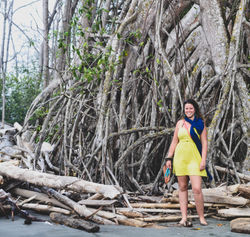 Olmedo, Esmeraldas, EcuadorIn Olmedo, women are more dedicated to the extraction of clams on the beach, very few to the extraction of shells in the mangrove swamp, because the production of this mollusk has decreased due to the overexploitation of shellfish. |
 Olmedo, Esmeralda, EcuadorThe boys take us to navigate the estuary of the Olmedo enclosure aboard a craft boat. Two of the crewmen push the ship with wooden levers, due to the low tide that keeps the access channel to the natural berth in the area dry. |  Olmedo, Esmeraldas, EcuadorWe have undoubtedly spent magical moments in this small fishing village |  Olmedo, Esmeraldas, EcuadorThe inhabitants, for the most part, walk barefoot through the streets or wear boots when they go to work. |  Olmedo, Esmeraldas, EcuadorShe really is very sweet. |
 Quito, Pichincha, EcuadorThere is in Quito a tree called arupo whose flowering in pink leaves announces the arrival of the Andean summer, which is accompanied by a very recognizable wind. His presence is constant and spontaneous. In a city where, as the natives point out, there are only two seasons (it rains or it does not rain), and for reasons of latitude (the country was born as the Republic of Ecuador in 1830, and the name comes from the equinoctial line that divides the world into two hemispheres) the sun appears a |  Pujili, Cotopaxi, EcuadorQuilotoa loop trek was one of the highlights of my travel to Ecuador. It is a round trail that connects remote villages, valleys, and beautiful mountains in the Cotopaxi region. |  Chilethe emotion of feeling the snow and playing like children |  Rurrenabaque, Beni, BoliviaSquirrel monkey Rurrenabaque Parque Nacional Madidi National Park Bolivia South America |
 Moon Valley, La Paz, BoliviaValley de la Luna (Moon Valley), isn’t actually a valley at all, but a maze of canyons and giant spires. The formations, composed mainly of clay and sandstone, were created by the persistent erosion of mountains by the area’s strong winds and rains. What remains is a serene setting, full of wonder and intrigue. |  BoliviaBolivian child from the highlands of La Paz. |  Lipez, Potosi, BoliviaBolivia’s Salar de Uyuni is considered one of the most extreme and remarkable vistas in all of South America, if not Earth. |  Rurrenabaque, Beni, BoliviaMadid National park is home to 46 indigenous communities from six different tribes. Over the last 50 years the Quechua and Aymara groups of Bolivia’s Andean highlands have been migrating to the Madidi region, competing with native lowland tribe such as the Chamas, Maropas, Chimanes and Tacanas who have lived in the south and southeast regions of the park for the past three centuries. |
 Cochabamba, Boliviastreet artist who steals smiles from people on the streets |  BoliviaOn the way to Tupiza |  Cartagena de Indias, Bolivar, ColombiaThe most sympathetic little girl of all manga, the beautiful Iza |  Santa Cruz del Islote, ColombiaThis island located off the coast of Colombia has only 1 hectare and 1,247 people live there. It is the most populous in the world, four times more populated than Manhattan. There are 90 houses, - some of which extend towards the sea to compensate for the lack of space -, two shops, a restaurant and a school for around 80 children. |
 Santa Cruz del Islote, ColombiaSanta Cruz del Islote, on the other hand, is completely urbanized and, in addition to the islets, is home to 150 fighting cocks, 40 dogs, two aquariums where there is a female nurse shark - and when I passed by, her newborn baby - 8 turtles giant hawksbill and dozens of other large rays and fish. |  Cartagena de indias, Bolivar, Colombiadreamy postcards, with its crystalline, blue and green waters |  Cartagena de Indias, Bolivar, ColombiaShe was the first Cartagena I met during my time in Bogota, a woman with a huge heart, she has made my stay a beautiful memory. very grateful to run into her on my way. |  San Basilio de Palenque, Bolivar, ColombiaThe iconic palenqueras of Cartagena, who appear in so many tourist photos, come from San Basilio Palenque |
 San Basilio de Palenque, Bolivar, ColombiaSan Basilio de Palenque is a small village nestled in the foothills of the Montes de Maria, a small mountain range to the south of Cartagena. It doesn’t appear in many guidebooks, and few tourists take the time to visit. |  San Basilio de Palenque, Bolivar, ColombiaThis musical heritage is celebrated annually in Palenque’s most famous festival: the Festival de Tambores y Expresiones Culturales, or Festival of Drums and Cultural Expression. Held every year in October, this three-day festival celebrates the unique musical gifts that Palenque has bestowed upon the world. |  San Basilio de Palenque, Bolivar, ColombiaPalenque is also the birthplace of some of Colombia’s finest boxers, musicians, and actors. The iconic Colombian boxer Antonio ‘Kid Pambelé’ Cervantes—a two-time world Jr. Welterweight champion—was born in the village, as was the actor Evaristo Márquez, who appeared alongside Marlon Brando in the movie Burn! in 1969. |  Santa Marta, Magdalena, ColombiaIn Taganga, a fishing village located fifteen minutes north of Santa Marta in a bay surrounded by mountains, travelers can learn to dive at several certified centers. |
 Sierra nevada, Santa Marta, ColombiaThe man, on the other hand, sleeps in a hammock and walks in shoes. Throughout the day they mambe, chew coca leaves, consider it a sacred plant |  Salento, Quindio, ColombiaSalento is a small, typically very colorful village located in the department of Quindío in Colombia. It is the most popular base camp from which to visit the Cocora Valley, one of the wonders of this country | 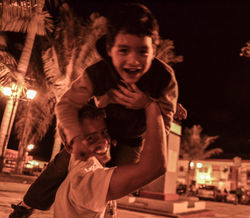 Salento, Quindio, Colombia.Salento. The name echoes in my head and I still smile. Salento with its colorful houses, with its characters, its squares and its corners. Salento by night and Salento by day. Salento with stories and names. Salento full of magic and secrets. |  San Cipriano, Valle del Cauca, ColombiaSan Cipriano is an Afro-American community that is about 3 hours from Cali and can only be accessed with a means of transport called «Brujita«. The witches are motorcycles attached to a wooden pallet that circulate along the train tracks and take you to this remote community that is well worth visiting. |
 Cartagena de Indias, Bolivar, ColombiaAbout 500 meters from the Getsemaní neighborhood is this imposing fortress castle. The most imposing of those built by the Spanish in the colonies. |  Cartagena de Indias, Bolivar, Colombiaone of the friends of life that you find in other countries coming from the same, many memories and much magic. |  Capurganá, ColombiaIts scientific name is Socratea exorrhiza, although it is better known by its nickname, "The tree that walks." This particular specimen, belonging to the palm family (Arecaceae), is native to the jungles of South America and Central America. |  Cartagena de Indias, Bolivar, Colombia.Palenqueras, a symbol of Cartagena women Dressed in colorful costumes and wearing a big smile, the palenqueras embellish the Historic Center of Cartagena de Indias, becoming part of the landscape. The reason for its name is due to its origins, since these women who kindly sell tropical fruits and delicious typical sweets, are from the first slave-free town in America, called San Basilio de Palenque, Mahates-Bolívar district. |
 Cienfuegos, CubaThe day we went to hack the abandoned ship and look for treasure. |  Cienfuegos, Cuba.They invited us to have lunch at the house of a friend of the captain and Mommy has prepared us the best food away that she has ever had in Cuba. Super happy crew! |  Trinidad, CubaCuban culture has a strong patriarchal Hispanic-African heritage, with a long homophobic tradition, a model of domination imposed by the Spanish colonial system and its official religion, along with a universal scientific production that stigmatized homosexuality. When the Revolution triumphed, all over the world the medical, psychological, social and legal sciences spoke out against homosexuality, and considered it an example of disease, madness, moral decay and deviation from social norms. |  Trinidad, CubaWalking through its streets you will feel the authentic Cuban spirit. You will go back in time, when the streets were not crowded with cars and life was much quieter. Let the spell of this town made city run through your body. |
 Trinidad, CubaTrinidad can be visited in less than a day, however it stuck with me for two weeks |  Viñales, CubaHavana is part of the culture of Cuba for many reasons. It is a tradition inherited, organically, from its first inhabitants, the Cuban aborigines called Taínos. Its cultivation and consumption was transmitted from generation to generation creating one of the most complex domain in America. |  Panama Canal, PanamaOne of the engineering wonders of our time. Its 50 miles in length connect the Atlantic and Pacific oceans through the narrowest portion of the Americas |  San Blas, PanamaThe indigenous Guna women of Panama and Colombia create handmade textiles that are very important for their culture and way of life. These textiles are called molas which mean clothes. Molas are square or rectangular, made of cotton, hand-sewn and most often used for blouses. However, molas are also worn on the ankles and hands. The story goes that in the past Guna women painted the figures that we see today in the molas on their bodies, but with the Spanish colonization, they began to express t |
 San Blas, PanamaPrado, This ‘third gender’ is a completely normal phenomenon on the islands. If a boy begins showing a tendency towards acting ‘female’, the family naturally accepts and allows him to grow up as such. Very often, Omeggid will learn a skill that is typically associated with women; for example, most Omeggid living on the islands become masters at crafting the most intricate molas. |  San Blas, PanamaWomen in Guna Yala enjoy an elevated status. A traditional Guna wedding includes a ceremonial abduction of the groom, not the bride, and when a young man is married off, he moves into the bride’s home. From that point on, his work belongs to the woman’s family, and it’s the woman who decides whether her husband can share his fish, coconuts or plantains with his own parents or siblings. |  San Blas, PanamaEven the partying here, is done to honour women: the three most important celebrations in the Guna Yala islands are a girl's birth, her puberty and her marriage. The whole community gathers to drink chicha, a strong local beer, to celebrate girlhood and womanhood. During the puberty celebration, a girl’s septum is pierced and adorned with a golden ring. |  San Blas, PanamaThe Guna has a strong culture that emphasizes values of community, nature, family, and spirituality. They have their own language, and a very distinctive and colorful style of dress, and make unique and exquisite handicrafts. The Guna culture has some fascinating aspects, especially when it comes to traditional gender roles, and many of the Guna people continue to observe this culture and live largely traditional lives to this day. |
 San Blas, PanamaCaptain Hernando has the privilege of living in the region and continuing to learn about its culture and customs, here with our friend Marcelino, another navigator if there are any. The Gunas are very fond of sailing too, sailing in the canoes. |  San Blas, Panama.My esteemed teacher, I am very grateful to you because when I had some difficulties learning, you were very supportive and patient with me. Once it became clear to me that i really has a vocation for the profession. | 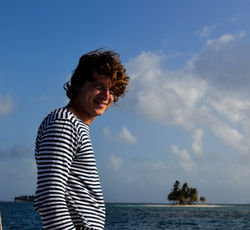 Pelican Island, Guna Yala, Panamaone of the many postcards on the islands |  San Blas, PanamaIt is the grandfather of many people, you could say, the typical drink of the Caribbean is Rum |
 San Blas, Panamalittle girl a little shy |  San Blas, PanamaThe children always happy, curious |  San Blas, PanamaWomen and Omeggid wear traditional dress that incorporates intricately hand-sewn and designed cotton molas and shakiras or winis – wrist and ankle beads with geometric patterns. Once the women are married, their hair is cut short, they wear red headscarves and a gold ring in their nose, which is thought to be treasure, showing how valuable they are. |  Marquises, French PolynesiaHiva Oa is the girder of the "great house" of the gods. Today, it is also known as the “Marquesas Garden” due to its lush and fertile lands. The island is home to a wild nature that extends to infinity: green, invasive, bright. Roads are few, houses too. |
 Hiva Oa, Marquises, French PolynesiaThe golden rays of the sun filter through the clouds hanging over the sharp peaks of the mountains, drawing a series of lights and surreal environments. Green and dizzying islands emerge from the Pacific Ocean, lands of history and legends as fascinating as they are unforgettable: welcome to the magic of the landscapes and environments of the archipelago of the Land of Men, the Marquesas. |
bottom of page